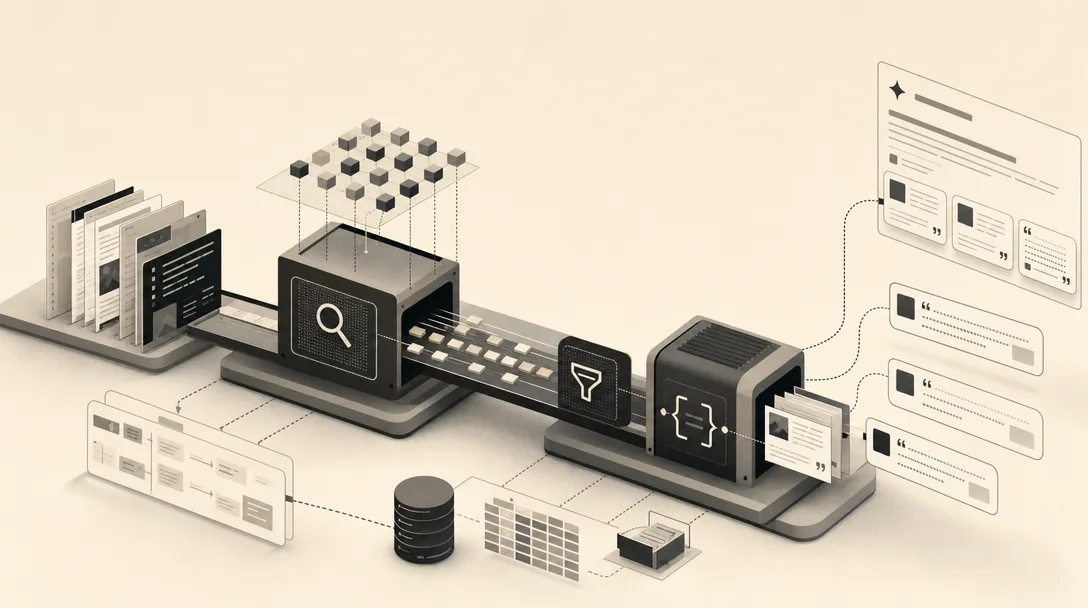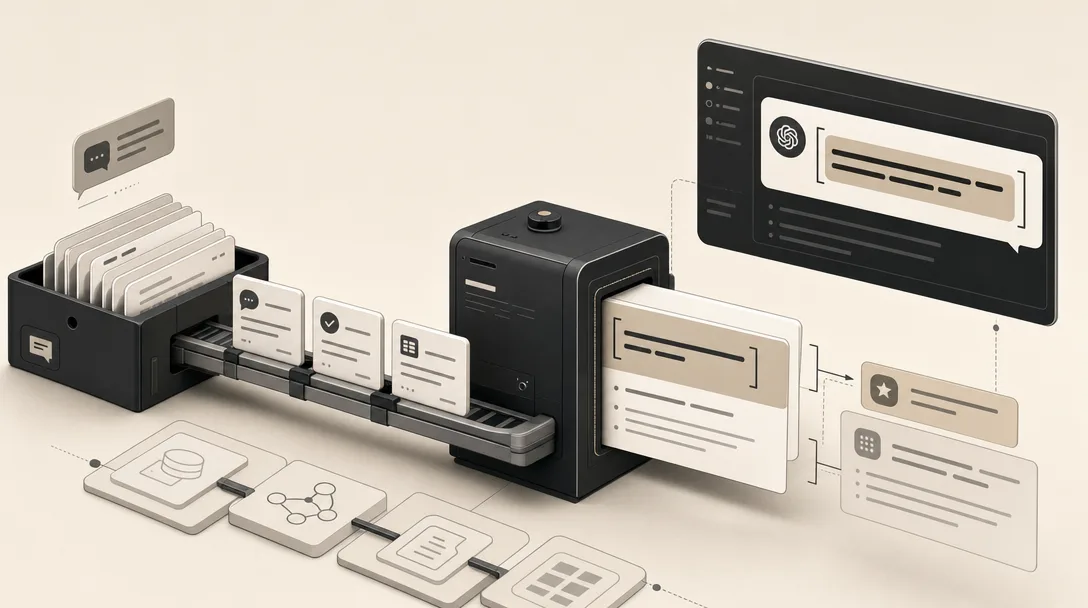
SEO vs AEO: which should a B2B SaaS invest in first?
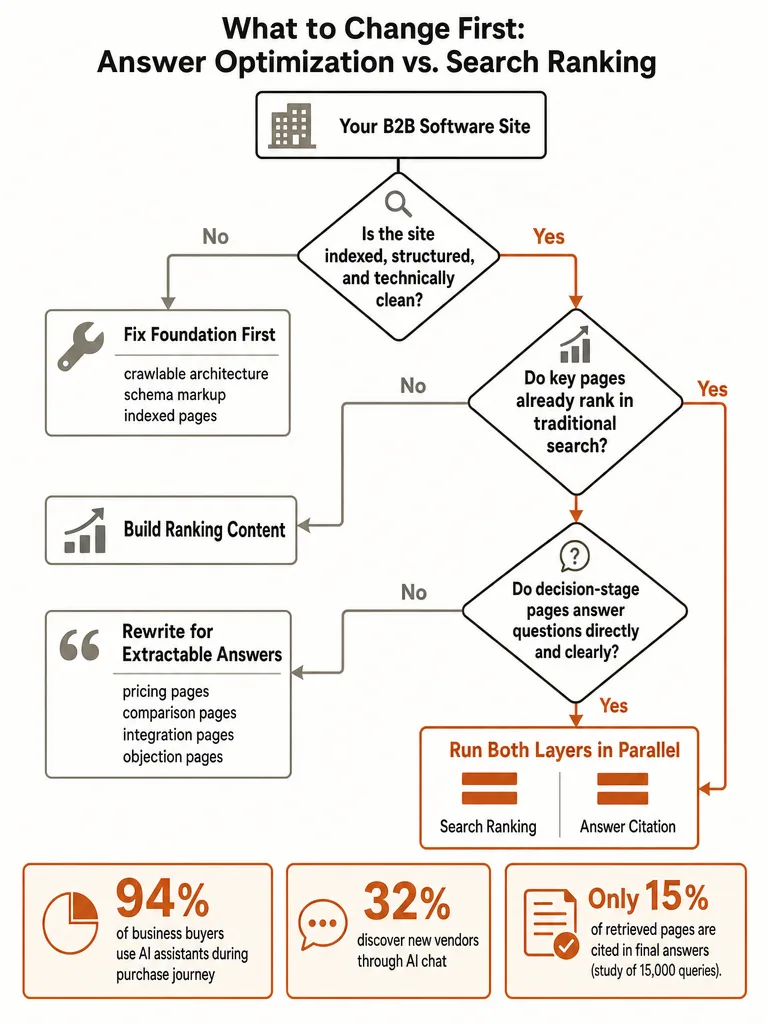
The order depends on whether your SEO foundation already exists. If your site lacks indexed content, schema, or clean architecture, fix that first, because search engines and AI systems both need crawlable, structured pages before they can rank or cite anything. If that foundation is already in place, answer engine optimization (AEO) is often the faster next dollar. LoudFace estimates that pages can earn AEO citations in 60-90 days, against SEO's 6-9 month traffic ramp.
Two variables settle the sequencing: site maturity and timeline pressure. A brand-new domain with thin content should not chase citations before it has anything indexed to cite. A mature site that already ranks has the eligibility AI systems require, so the marginal return shifts toward passage-level AEO work that makes existing pages quotable.
The financial timeline reinforces the point. LoudFace puts median SEO ROI breakeven around month seven for a B2B SaaS site, with a range of roughly five to ten months. AEO wins on a decent SEO base land sooner.
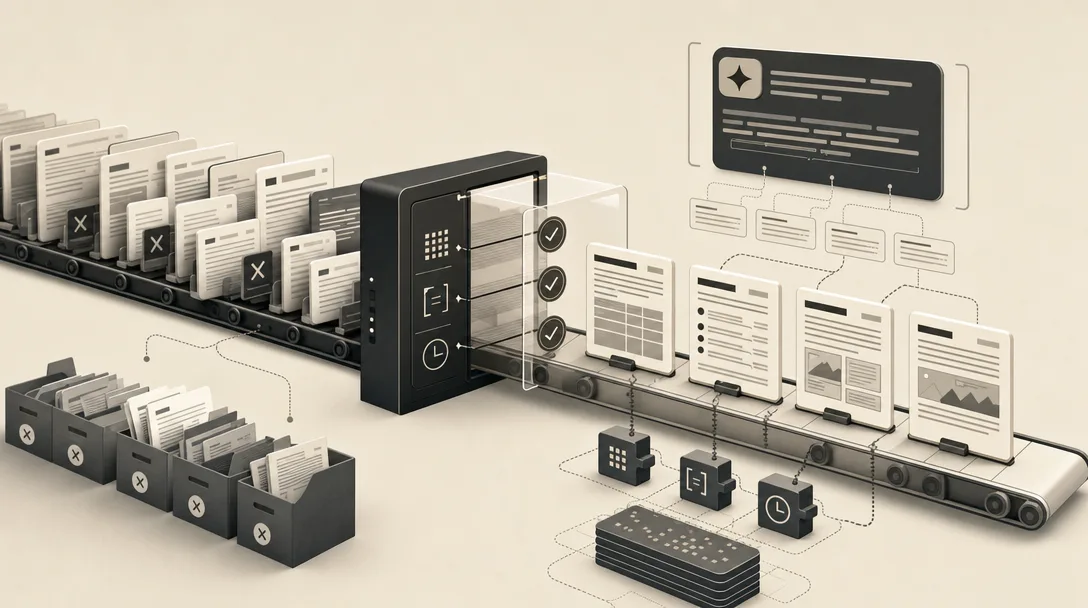
AEO vs SEO: what's the difference, and where do you begin?
The difference is the outcome, not just the acronym. SEO ranks pages in traditional search results and earns clicks; AEO structures content so AI systems extract it as a direct answer and cite your domain. The 2026 field guide from Chetan Giridhar puts it plainly: with SEO you earn clicks, with AEO you earn citations.
Answer engine optimization is the practice of structuring content so AI assistants like ChatGPT, Claude, Perplexity, and Google AI Overviews extract, cite, and recommend your brand in their answers. That definition comes from StartupCookie's AEO playbook, and the operative verb is "extract."
Where you begin is the same place both disciplines start: a crawlable, indexed page. SEO makes you visible; AEO makes you usable by answer engines. As the team at Underscore frames it, AEO is "SEO plus one more layer." You don't pick one. You establish the base, then add the extraction layer on top.
If you want the full acronym boundary, our 2026 acronym decoder maps AEO, GEO, LLMO, AIO, and AISO by surface and metric.
Does AEO work without strong SEO?
No. AEO depends on the same crawlable, indexed, structured foundation that SEO builds. Answer engines cannot extract or cite a page they cannot reach, parse, or trust. Animalz makes the dependency explicit: AEO should supplement, not replace SEO performance, and teams should keep monitoring rankings and organic traffic as a baseline.
Google's AI features run on the same ranking systems and index as traditional search. A page that isn't eligible to rank isn't eligible to appear inside an AI Overview either. So the SEO foundation determines whether your content can show up anywhere at all.
Retrieval is not the finish line. An AirOps study of 15,000 real ChatGPT queries found that only 15% of the pages ChatGPT retrieved during answer generation were actually cited in the final answer. Being found is necessary; being quotable is what earns the citation.
The practical bar for AEO to pay off:
- Pages are crawlable and indexed, with clean architecture and internal links.
- Content is authoritative enough to be trusted as a source.
- Structure is machine-readable: schema, headings, and clear passages.
Once those hold, the passage-level work starts moving the needle. Before they hold, it can't. Our Perplexity citation checklist covers the crawl-access prerequisites in detail.
What should teams change first on pages that already rank?
Separate page-level SEO hygiene from passage-level AEO rewrites, and start with the passages. On a page that already ranks, the SEO fundamentals are working. The gap is that AI systems quote paragraphs, not pages, so the fix is making each section liftable. StartupCookie notes that a clear answer in the first 60 words of every H2 tends to dominate the rest of the page.
Work through this order on a ranking page:
- Add a direct answer to the first sentence of each H2, phrased so it reads correctly out of context.
- Name entities precisely — real company names, product names, and statistics with sources, not vague references.
- Add or tighten schema — Article, FAQPage, and BreadcrumbList JSON-LD so systems can parse structure.
- Attribute every claim to a named source, since AI systems favor verifiable statements.
- Update freshness signals — recent dates and last-updated timestamps.
If you'd rather run this whole workflow across a site instead of one page at a time, Get My Site GEO Optimized walks through onboarding and the archive refresh pipeline.
Length matters here. StartupCookie's page audits found pages over 2,500 words underperform pages under 2,000 on citation rate, with a reported sweet spot of 500-2,000 words. Bloated "ultimate guides" often need trimming, not expansion.
For a repeatable version of this on old posts, see how to get cited in ChatGPT using posts you already have.
What pages should B2B SaaS teams optimize first for AEO?
Start with decision-stage pages, because that's where AI-assisted buyers are forming shortlists. Commercial B2B SaaS work should begin with the questions that precede a purchase: pricing, implementation, security, integrations, and alternatives, per Andrei Visan's SEO-versus-AEO breakdown. These pages influence a buying decision directly, so a citation here is worth more than one on a top-of-funnel explainer.
The urgency is real. StartupCookie cites research that 32% of buyers now discover new B2B vendors through generative AI chatbots, and that 51% of B2B software buyers start research with an AI chatbot more often than with Google, drawing on G2's March 2026 AI Search Insight Report of 1,076 buyers.
A practical priority order:
| Priority | Page type | Buyer question it answers |
|---|---|---|
| 1 | Pricing | What does it cost, and how is it structured? |
| 2 | Alternatives / vs | How does it compare to named competitors? |
| 3 | Integrations | Does it connect to my stack? |
| 4 | Implementation | How long and how hard to deploy? |
| 5 | Objection-handling | Security, compliance, migration risk |
| 6 | High-intent educational | Category and use-case questions before shortlist |
Comparison and category pages are the ones most often missing when a brand fails to appear in an AI answer. Comparison and category pages are often what make a brand recommendable, not just rankable.
How long do AEO results take compared with SEO gains?
AEO moves faster than SEO in the early innings. AEO results such as featured snippets can appear within 2-6 weeks, while SEO rankings typically take 3-6 months, per Am I Cited's decision framework. That same source puts GEO citations starting to appear within 2-3 months.
The gap widens on full payoff. LoudFace estimates AEO citations can land in 60-90 days, against SEO's 6-9 month traffic ramp, and puts median SEO ROI breakeven around month seven for a B2B SaaS site.
| Program | First visible result | Fuller payoff |
|---|---|---|
| AEO citations | 60-90 days | Sustained citation share over quarters |
| Featured snippets | 2-6 weeks | Depends on query competition |
| SEO rankings | 3-6 months | Traffic ramp 6-9 months |
| SEO ROI breakeven | — | ~month 7 (range 5-10) |
| GEO citations | 2-3 months | Compounds with authority |
The timing framing is why sequencing matters. On a site with the SEO foundation already in place, AEO buys visible progress inside a quarter while SEO compounds in the background. Both timelines above assume the crawlable, indexed base already exists.
Is AEO replacing SEO?
Not at all. AEO and SEO are complementary layers, not competitors. SEO delivers durable discovery and the eligibility that lets a page appear anywhere; AEO earns citation and inclusion inside synthesized answers. Animalz describes this as a dual operating model: SEO for durable discovery and qualified traffic, AEO for brand presence inside AI responses.
The numbers on both sides justify running both. Organic search still accounts for 26.4% of all B2B website traffic, and 61% of marketers call it their top inbound priority, per Austin Heaton. At the same time, top-ranking pages can see 30-60% CTR drops once AI Overviews appear, according to Chetan Giridhar's field guide.
That's the tension in one line: ranking still matters, but ranking no longer guarantees the click. The clicks AI Overviews absorb are recovered by being the cited source inside the answer. You need both layers because buyers now move across both surfaces in a single research session.
What is the difference between SEO, AEO, and GEO?
Three disciplines, three units of success. SEO ranks pages in traditional search and earns clicks. AEO structures extractable answers so AI systems cite your content inside their responses. GEO (generative engine optimization) broadens the work to brand visibility and accurate framing across the whole ecosystem of AI-generated answers, including entity authority and off-site presence.
| Discipline | Optimizes for | Unit of success |
|---|---|---|
| SEO | Ranking in search results | Clicks |
| AEO | Extraction inside AI answers | Citations |
| GEO | Brand visibility across generative engines | Mentions and framing |
Chetan Giridhar's field guide describes GEO as including AEO but extending to entity authority, off-site presence, and brand consistency across the sources LLMs pull from. The practical sequence, per Am I Cited, is to build the SEO foundation first, add AEO structure, then layer GEO authority.
Keep the boundary tight: AEO is passage-level extraction inside answer surfaces; GEO is the wider authority and presence work across engines. Our full breakdown of what GEO means in 2026 covers the entity-signal side.
Which metrics prove the next quarter is working?
Track SEO baselines and AEO citation metrics side by side, because they measure different surfaces. Animalz is direct: keep monitoring rankings, organic traffic, and conversion rates while AEO supplements them. SEO metrics tell you the foundation is healthy; AEO metrics tell you whether AI systems are quoting you.
Split the dashboard into two layers:
SEO baseline metrics - Keyword rankings and ranking distribution - Organic traffic and qualified sessions - Conversion rate and pipeline contribution
AEO and citation metrics - Citations in ChatGPT, Perplexity, Claude, Gemini, Copilot, and Google AI Overviews - Brand mentions inside answer bodies - Citation share against named competitors on target prompts
Citation share is the metric most teams miss, and it's the one that exposes absence. LoudFace observed the pattern directly: across two dozen tracked agency brands, 23 sit at zero AI visibility on the AEO-vs-SEO question. If competitors fill the ranked lists in an answer and you're not in it, rankings alone will never show that gap.
If you can't yet see where you're mentioned across engines, an AIO tracker with a fixed prompt set and weekly re-checks is the starting instrument. Rankings without citation data leaves half the picture dark.
How should an existing SEO archive become citation-ready?
Refresh existing URLs rather than rebuilding, because your archive already holds the ranking equity AI systems require. The move is triage: keep the URLs that rank, and refactor the ones with the strongest citation potential into answer-first passages. This preserves link equity while making pages extractable.
The retrofit work is consistent across engines. Update facts and freshness dates, add a direct answer near the top of each section, tighten schema, and reinforce with internal links. Our guide on how to refresh old SEO posts for AI citations walks the same-URL update in order, and how do you retrofit old SEO posts for AI Overviews covers the diagnosis-first version.
Match the retrofit to the target surface:
- For ChatGPT, align crawl access and retrieval fields, per getting cited in ChatGPT using posts you already have.
- For Google AI Overviews, improve pages you already rank with, per showing up in AI Overviews without starting over.
- For a whole-archive plan, see the AEO content strategy for teams with existing SEO archives.
Not every old URL earns a refresh. A GEO content strategy for sites with old blogs starts with triage so you spend effort on the pages that can actually win a citation.
When does a content engine make more sense than another manual SEO push?
A content engine makes sense when the work becomes repeatable across many pages or many sites, and manual production can't hold consistency. Publishing citation-shaped content is operationally heavy: every page needs answer-first passages, named entities, schema, sourced claims, and freshness updates, then periodic refreshes. That's a pipeline, not a one-time push.
Mentionwell runs that pipeline as an automated blog engine: onboard a domain, define a site profile, and it ships research-grounded articles with AEO, GEO, LLMO, and SEO built into each draft, delivered into an existing CMS or headless stack. The design goal is consistent, citation-shaped output across one site or hundreds, plus archive refreshes on the pages you already have.
Choose the engine over another manual sprint when:
- You're managing content across multiple client sites and need brand-consistent output at scale.
- Your archive is large enough that refreshes alone are a standing workload.
- You want programmatic SEO with editorial controls, not templated thin pages.
- You need AEO, GEO, LLMO, and SEO handled in one workflow rather than stitched across tools.
Monitoring tools tell you where you're absent from AI answers; they don't write the pages that close the gap. For where that line sits, compare an AI search content engine and what B2B SaaS teams need. If your problem is still diagnosis, a tracker is enough. If it's production and consistency, an engine is the fit.
If that's the problem you're solving this quarter, Get My Site GEO Optimized is where the onboarding and site profile setup begins.
Sources
- GEO vs AEO vs SEO: The 2026 Field Guide for B2B SaaS ...www.linkedin.com
- AEO for B2B SaaS: The 2026 Practitioner Playbookstartupcookie.com
- AEO vs SEO: What's the difference, and where do you begin?www.madebyunderscore.com
- SEO vs. AEO: A field guide for B2B SaaS content marketerswww.austinheaton.com
- B2B SaaS SEO and AEO Strategy for Modern Growthwww.loudface.co
- SEO vs AEO: What to Invest In First (2026) | LoudFaceandreivisan.com