Do AI Engines Actually Cite Programmatic SEO Pages?
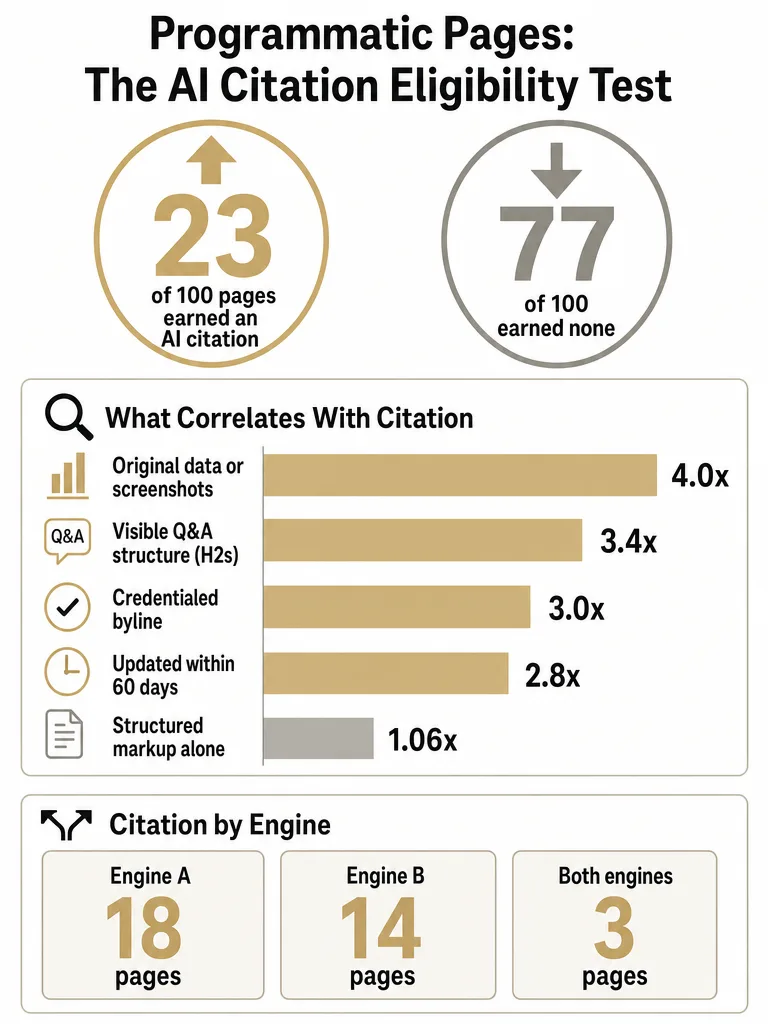
Programmatic SEO earns AI citations in a minority of cases: only 23 of 100 audited pages picked up at least one citation across ChatGPT and Perplexity, according to a 2026 audit from Growth Engineer. Unique data, visible answer structure, and a recent update decide which programmatic SEO pages earn AI citations, not the templated format itself.
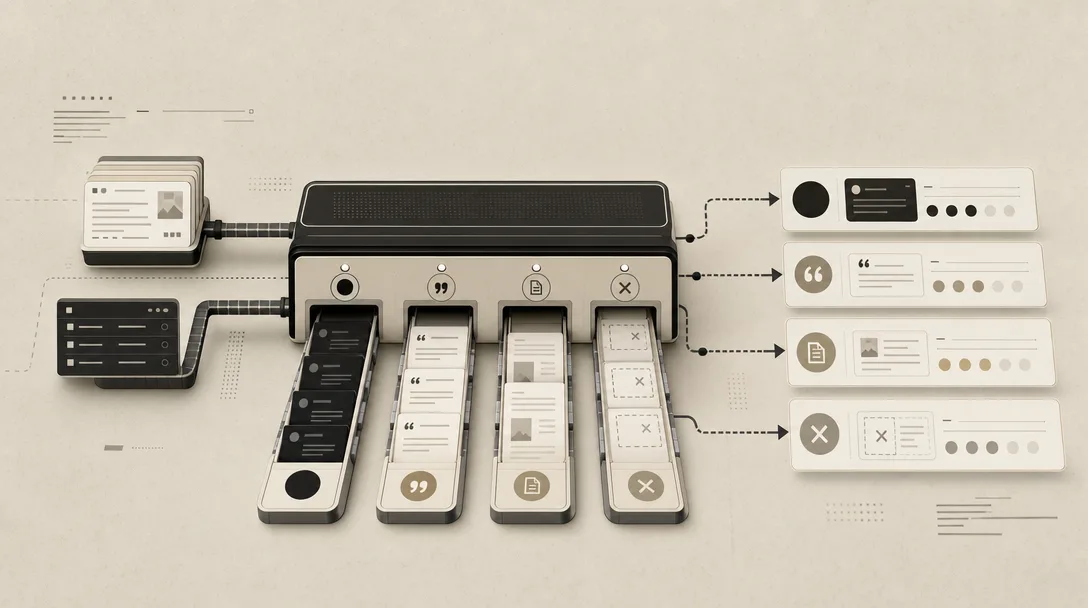
Growth Engineer sampled 100 programmatic pages from 12 B2B SaaS brands across four template types, then ran 50 prompts three times each in ChatGPT and three times each in Perplexity between April 12 and April 28, 2026. The result split cleanly: 23 pages got cited somewhere, 77 never showed up in a single answer.
A programmatic page has to earn its citation the same way a hand-written one does, by containing something an AI engine can't get anywhere else. Publishing a thousand near-identical pages doesn't change that math. It just multiplies the pages competing for the odds Growth Engineer measured in its audit, roughly 23 in 100.
What Is Programmatic SEO, and Why Did AI Search Change the Math?
Programmatic SEO is the automated creation of many search-focused pages from a single template and a structured dataset, filling one layout with different rows of data rather than writing each page by hand, according to Americaneagle.com's guide to the practice. AI search changed the economics of that model because answer engines cite unique, quotable evidence and ignore thin pages where only one variable changes across an otherwise identical template. A travel site generating destination pages for hundreds of cities, or a directory building a listing page per category, both fit the classic definition.
Classic SEO tolerated thin versions of this because ranking for a sliver of long-tail queries still returned some traffic, even from a weak page. Zapier's integration pages and GetLatka's SaaS-revenue pages became the reference model for doing it well, according to Discovered Labs, because both anchored templates in genuinely structured, per-page data rather than a single swapped variable.
AI search removed that tolerance. Omnibound.ai's analysis of programmatic SEO for AI search puts it plainly: AI engines cite sources, and they do not cite generic templated filler that has nothing distinct to quote.
Which Page Elements Actually Correlate With AI Citation?
Original data and visible answer structure correlate with AI citation far more strongly than schema markup does, according to Growth Engineer's 2026 audit of 100 programmatic pages. Original data or screenshots produced the largest lift, at 4.0 times the baseline citation rate, while FAQPage schema on its own added almost nothing.
| Page element | Citation lift vs. baseline |
|---|---|
| Original data or screenshots | 4.0x |
| Visible H2 question-and-answer structure | 3.4x |
| Credentialed author byline | 3.0x |
| dateModified within 60 days | 2.8x |
| FAQPage schema alone | 1.06x |
The gap between the top row and the bottom one is the whole story. A page that bolts FAQPage schema onto a templated shell without changing anything a reader can see gets almost no benefit; a 1.06x lift is close to noise. A page that shows its own number, a screenshot, or a named author, and structures the answer as a visible question and answer instead of a marketing paragraph, moves several times closer to getting quoted.
Growth Engineer also found a length ceiling: pages over 4,000 words were cited only 16% of the time, with the strongest citation band sitting between 1,500 and 2,500 words. Bulk word count doesn't substitute for evidence.
The Three Conditions That Separate Citable Templates From Invisible Ones
Programmatic pages earn AI citations only when three conditions hold at once: unique per-page data, schema matched to the actual content type, and targeting of a specific long-tail query, according to SCALEBASE's analysis of 14,000 programmatic pages across 9 domains over eight months. Meet all three and a page cites at 0.8x the rate of hand-written content. Miss even one, and the rate drops to 0.1x.
That 0.8x-versus-0.1x gap explains a tension in the wider research: SCALEBASE treats schema as one of three required conditions, while Growth Engineer found FAQPage schema on its own carries only a 1.06x lift. Both findings hold at once. Schema alone, bolted onto a generic template, does almost nothing. Schema paired with unique data and visible structure is one leg of a three-legged stool; pull any leg out and the page falls back toward invisible.
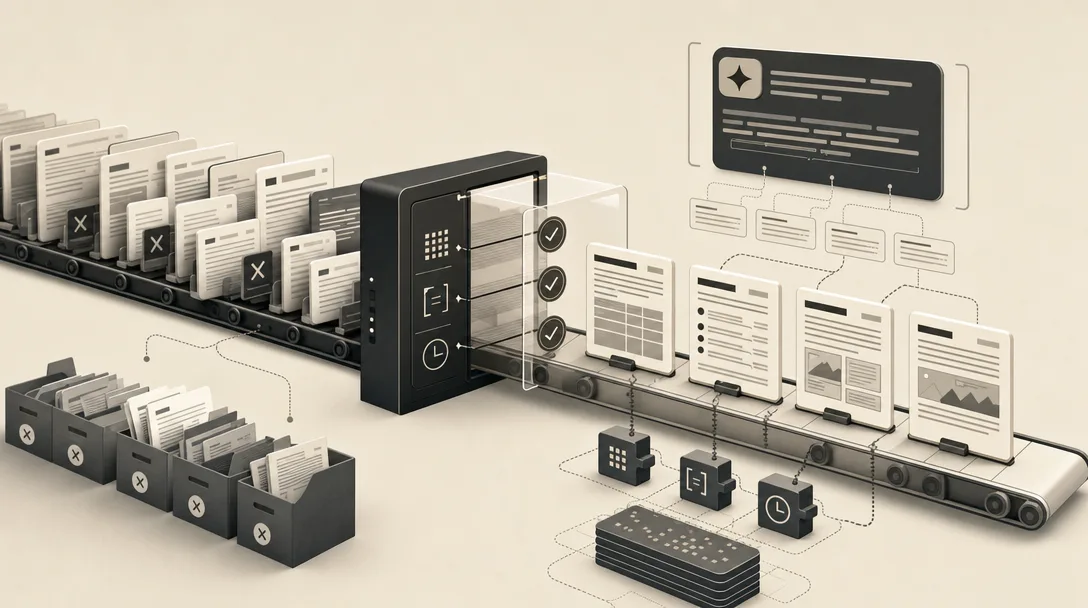
The practical read: whether a programmatic template is citable comes down to a checklist of three conditions, not a fixed label attached to the template itself. A B2B team running comparison or integration pages at scale can audit against a URL-level go/no-go test for programmatic pages before generating the next batch, rather than finding out after the fact which template variant an AI engine ignored.
ChatGPT vs Perplexity: Do They Cite the Same Programmatic Pages?
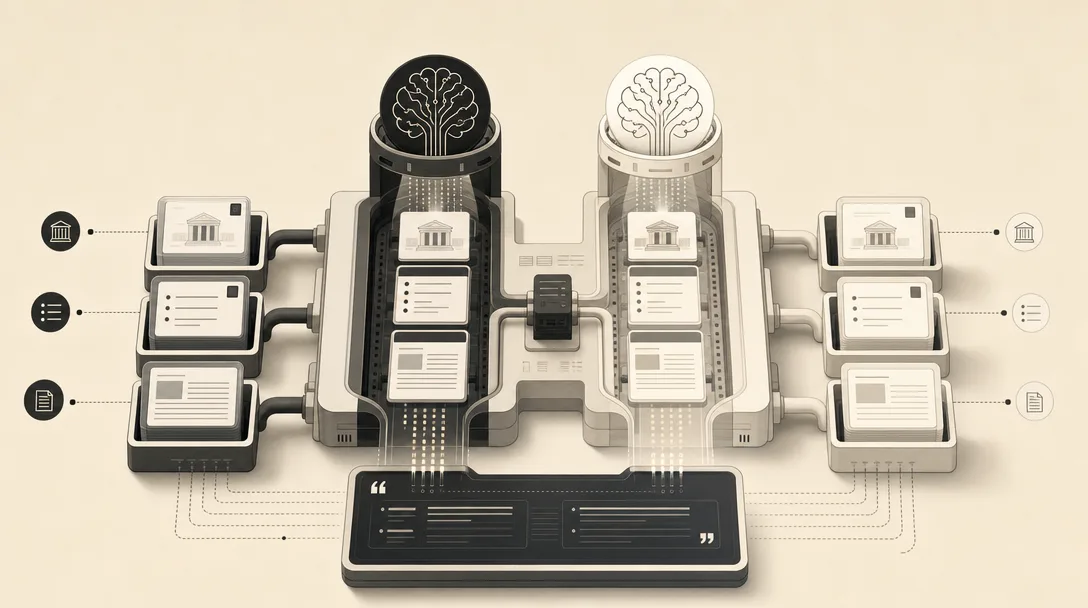
ChatGPT and Perplexity barely overlap on which programmatic pages they cite: only 3 of the 100 pages in Growth Engineer's audit were cited by both engines, even though 23 were cited by at least one. Treating "AI citation" as a single target misreads how retrieval actually works, engine by engine.
| Engine | Share of audited pages cited |
|---|---|
| ChatGPT | 18% |
| Perplexity | 14% |
| Either engine | 23% |
| Both engines | 3% |
The near-nonexistent overlap means a page built to satisfy one engine's retrieval pattern won't automatically satisfy another's. The evidence available here only compares ChatGPT and Perplexity; Growth Engineer's audit did not measure Google, so extending this specific overlap number to Google's citation behavior isn't something the data supports.
For a B2B team running programmatic SEO at any volume, the operational implication is to check engine-specific behavior rather than run one audit and generalize the result. An AI search content engine built for B2B SaaS has to plan for that divergence directly, because a format that lifts one engine's citation rate can leave another engine's rate untouched.
How to Decide Between a Template and a Hand-Written Page for a Query Set
Choose a template when the dataset behind a query set is deep enough to make every row genuinely different, and choose hand-written editorial pages when it isn't. The decision sits upstream of citation performance: a template applied to shallow data can't be patched into citability later with better copy.
- Count the unique facts per row. If a spreadsheet column has fewer than a handful of distinct, verifiable values per page, such as price, integration status, or a measured number, the template will produce near-duplicates no matter how the copy is worded.
- Check query specificity. Broad head terms usually need one strong editorial page; long-tail variations with a real per-entity difference, like a city, an integration, or a job title tied to a salary figure, are the programmatic model's actual use case.
- Inventory available evidence. A page without a screenshot, a number, or a named source to cite has nothing for an AI engine to quote, regardless of template or editorial format.
- Let generative AI fill copy, not facts. Use it to draft phrasing around confirmed data points, never to invent a statistic, price, or claim the dataset doesn't contain.
Two related playbooks go deeper on each side of this split: what to standardize in a SaaS programmatic template and when glossary-style terms should stay templated versus editorial.
How Often Do Programmatic Pages Need to Be Refreshed to Stay Citable?
Pages with a dateModified inside the last 60 days were 2.8 times more likely to be cited than older, untouched templates, according to Growth Engineer's 2026 audit. That's a correlation from one audit, not a universal rule, but it's the strongest evidence available for treating 60 days as a reasonable refresh cadence to test on a programmatic set rather than a hard requirement every page must hit. A page that hasn't been touched in six months is competing at a structural disadvantage even if its original data was strong at launch.
Trevor Fox's real-time programmatic AI SEO case study on LinkedIn documents a related failure on the ranking side: pages that "add absolutely nothing new to the index" lost both search rankings and their count of indexed pages once the initial freshness window closed. That indexing and ranking decay is a separate signal from Growth Engineer's citation data, but it points at the same fix: a refresh has to add a fact, a number, or a changed answer, not just a touched-up timestamp.
For teams running programmatic sets across dozens or hundreds of pages, that refresh cadence is an operational problem before it's a content one. How to refresh old SEO posts for AI citations covers the mechanics; a scheduled refresh pipeline is what keeps a programmatic set from aging out of that citation band, page by page.