How to get cited in ChatGPT using posts you already have
Getting cited in ChatGPT means being one of the named sources the model quotes and links when it answers with live web search, and existing posts win it by being crawlable, retrievable, and quotable. A 2025 audit reported by Is My Brand in AI found that 72.4% of ChatGPT-cited posts had an answer capsule, a short block that resolves the question directly near the top.
Placement matters as much as presence. The same source reports that 44% of ChatGPT citations come from the first third of the page. That gives you a clear retrofit order. First make sure OpenAI's crawler can reach the page. Then package the retrieval fields, title, snippet, and URL, so ChatGPT decides the page is worth opening. Then plant a 40 to 80 word direct answer near the top, built to be lifted verbatim.
The rest of this guide walks the two-stage model, retrieval then quotation, and the exact sequence for refreshing an old post. If you run an existing SEO archive, that archive is your fastest path to citations.
Ready to make your archive quotable in AI answers? Get My Site GEO Optimized.
How does ChatGPT actually decide what to cite?
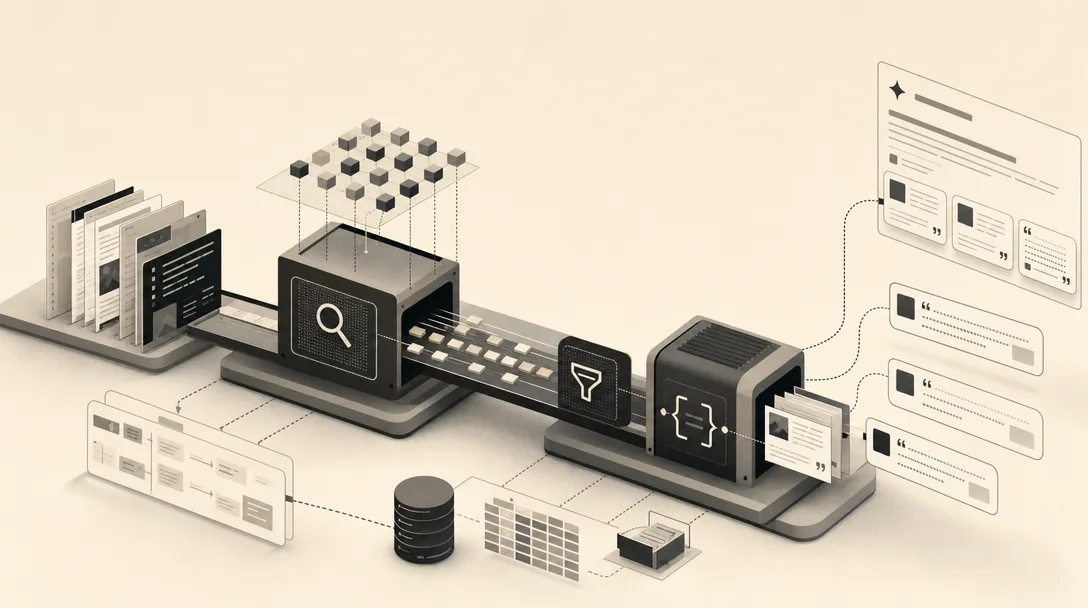
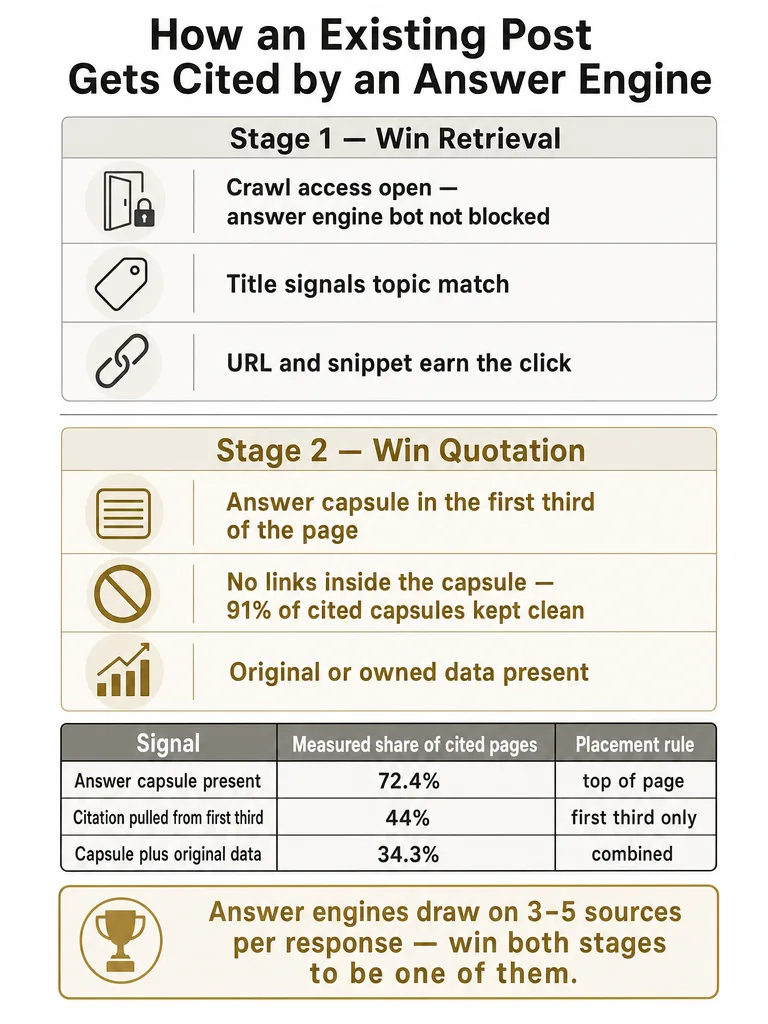
ChatGPT citation runs in two stages: retrieval first, quotation second. When a question is current or specific, ChatGPT runs a live search, pulls back a set of URLs, and writes its answer from the passages that best match. Ahrefs research, summarized in Edward Sturm's walkthrough of the study, analyzed 1.4 million ChatGPT 5.2 prompts from February 2025 to isolate what drives citation likelihood.
The gatekeeping happens before your page is even opened. The Ahrefs findings, as summarized in that video, show ChatGPT evaluates a page title, a brief snippet, the URL, and an ID number to decide which results are worth reading in full. Only then does it open the survivors and select passages.
Retrieval is not the same as citation. The study found ChatGPT retrieves dozens of URLs for a query but cites only around 50% of them. So getting retrieved gets you into the room; getting quoted requires a passage the model can lift cleanly.
The strongest lever the research names is semantic relevance to fan-out queries: the related sub-questions ChatGPT expands a prompt into behind the scenes. Titles, snippets, and natural-language URLs that align with those sub-questions raise your odds at the retrieval stage.
Retrieval decides who gets read; quotation decides who gets cited, and they are two different fights.
What has to be true technically before ChatGPT can cite one of your pages?
Crawler access is the hard gate. A page that blocks OpenAI's OAI-SearchBot will not appear in ChatGPT's search summaries and snippets, according to OpenAI documentation as summarized by The Social Target. If that bot is disallowed in robots.txt, no amount of formatting will earn a citation, because the page never enters the retrieval pool.
The second technical fact is about when links appear at all. ChatGPT only shows source links when it triggers a live web search. Answers drawn from training knowledge alone show no live source link, so a page can be perfectly optimized and still go uncited on prompts that never fire a search.
Public evidence on other technical signals is thinner. Some guides recommend an llms.txt file, but the sources here do not substantiate a measured effect on ChatGPT citations, so treat crawler access, not llms.txt, as the load-bearing requirement.
Where on an existing post should the direct answer go?
Put a 40 to 80 word answer in the first third of the post, written to stand on its own. Is My Brand in AI reports that 44% of ChatGPT citations come from the first third of the page, and that the strongest measured predictor of citation was an answer capsule: a short block that resolves the question directly near the top.
The capsule has to read correctly when pulled out of context. That means no "as discussed above," no dependence on the heading, and the key term in the first few words. Write it as a claim sentence, one line of context, then one sentence carrying a number if you have a real one.
Keep the capsule clean of links. The same audit found that 91% of cited answer capsules had no links inside the capsule, which suggests inline links reduce quotability. Move your internal and external links into the surrounding paragraphs, not the block you want lifted.
Should you rewrite long SEO posts or restructure the top third?
Restructure the top third first. A full rewrite is rarely the fastest route to a citation when the existing post is already relevant to the query, because ChatGPT rewards a quotable passage more than raw length. Keep the URL, keep the ranking equity, and fix the parts that block extraction.
The retrofit is mostly subtraction and reordering:
- Cut throat-clearing intro padding so the direct answer sits in the first third.
- Add or sharpen the answer capsule at the top.
- Split dense multi-idea paragraphs into short, single-idea blocks the model can extract.
- Only then consider deeper rewriting if the post no longer matches the query.
This diagnosis-first approach preserves what already works. For a fuller triage of when to update versus rebuild, see how to retrofit old SEO posts for AI Overviews and how to refresh old SEO posts for AI citations.
| Situation | Move |
|---|---|
| Post is relevant, buried answer | Restructure top third, keep URL |
| Post is relevant, dense blocks | Split paragraphs, add capsule |
| Post no longer matches the query | Rewrite body, hold the URL |
Does word count affect AI search visibility?
Length is not the lever most teams think it is. In Evertune AI research summarized by Jaclyn Ranere and analyzed by Will Robinson, the median ChatGPT-cited page was 941 words, not 2,500 and not a sprawling pillar. The dataset came from roughly 33,000 heavily cited URLs across nearly 50 product categories, so these are observed medians, not guarantees.
The structural medians are more useful than the raw count:
| Element | Median on cited pages |
|---|---|
| Word count | 941 |
| Paragraphs | 18 |
| Sentence length | 17 words |
| H2 headers | 4 |
| H3 headers | 2 |
Eighteen paragraphs across 941 words is roughly one paragraph per 50 words: short, scannable blocks that let the model extract discrete ideas. Seventeen-word sentences and four H2s signal a clear hierarchy without over-fragmenting the page.
Ranere is explicit that these are baselines. Hitting them will not guarantee a citation, but consistently falling short reduces your odds. If a page is 400 words of thin copy, add depth; if it's 4,000 words of padding, cut it.
What the 2026 data actually says about answer capsules and original data
Original data and a top-of-page answer stack. Is My Brand in AI's summary of a 2025 Search Engine Land audit by Adam Gnuse reports that 52.2% of cited posts included original or owned data, and 34.3% had both an answer capsule and original data, making that combination the highest-performing pattern in the audit.
Separate what's measured from what's inferred. The capsule and original-data figures are counts from cited pages, not proof that either element caused the citation. The structural medians below come from the separate Evertune dataset, so treat them as correlated traits of cited pages, not a formula.
| Metric | Value | Source |
|---|---|---|
| Cited posts with an answer capsule | 72.4% | Search Engine Land / Adam Gnuse |
| Cited posts with original or owned data | 52.2% | Search Engine Land / Adam Gnuse |
| Capsule + original data together | 34.3% | Search Engine Land / Adam Gnuse |
| Citations from first third of page | 44% | Kevin Indig |
| Median internal links | 28 | Evertune AI |
| Median external links | 15 | Evertune AI |
| Median images | 10 | Evertune AI |
The internal-link median is the surprise. Twenty-eight internal links correlates with cited pages sitting inside broader content ecosystems, not standalone posts, which is where a repeatable GEO content strategy for old blogs pays off.
Why do some prompts show no ChatGPT citations at all?
Citations only appear on live-search answers, so the prompt type decides whether links show up. When ChatGPT answers from training knowledge alone, there is no live web search and no source link, no matter how citable your page is. That's why optimizing a page for a prompt that never fires a search yields nothing.
The variation is stark. Is My Brand in AI reports its own raw-data test where, across 48 runs in August 2026, ChatGPT cited 4 to 9 sources on every "best X" question and zero on every "X vs Y" and every "how to" question.
That should change what you optimize first. Roundup and "best of" queries reliably trigger citations, and Ahrefs research reported by Is My Brand in AI found 43.8% of citations on "best of" queries went to roundup pages. Comparison and how-to prompts are less predictable surfaces for a live-search citation.
Prioritize retrofitting posts that map to citation-triggering query types before pouring effort into prompt patterns that rarely surface links.
What is the practical order of operations for refreshing an old post for ChatGPT citations?
Fix the pipeline in sequence, not all at once. The corpus supports a five-step order that mirrors the two-stage retrieval-then-quotation model, so each step only matters once the one before it is solved.
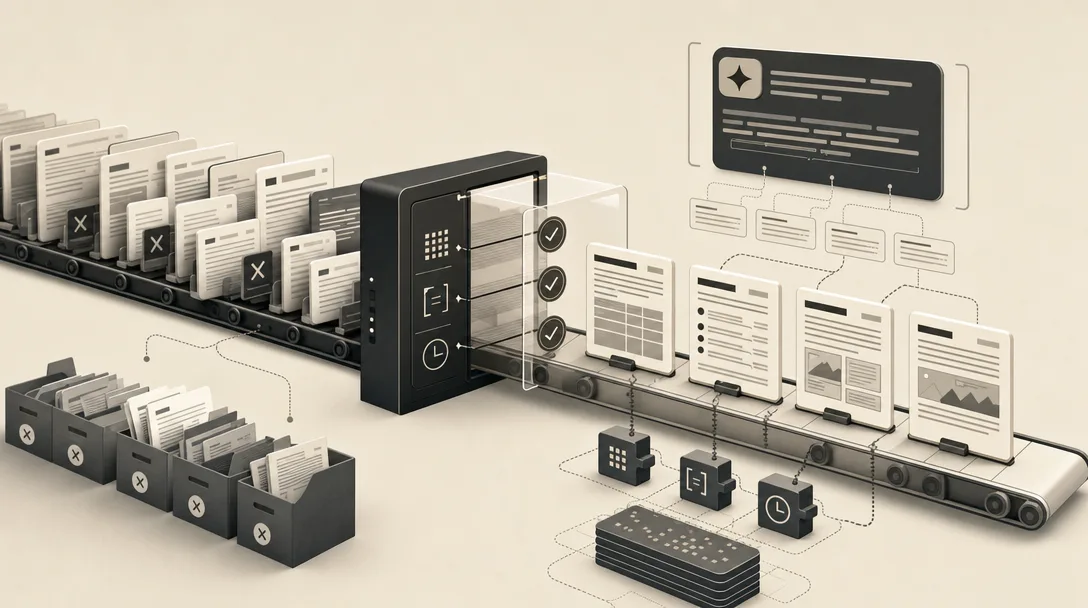
- Confirm crawler access. Verify OAI-SearchBot is not blocked in robots.txt. Per OpenAI documentation summarized by The Social Target, a blocked page never enters ChatGPT's search results.
- Align the retrieval fields. Rewrite the title, snippet, and URL to match the fan-out sub-questions a reader would ask. The Ahrefs study found these fields decide which pages get opened.
- Add the answer capsule. Place a 40 to 80 word direct answer in the first third, no links inside it, since 91% of cited capsules had none.
- Support with owned data and credible sources. 52.2% of cited posts carried original or owned data; add a stat, a benchmark, or external links to primary sources.
- Refresh and update. Update facts and dates so the page reads current.
Page-by-page archive scoring is where public method runs thin. The sources here don't cover a verified step-by-step system for scoring an entire archive or a benchmark for how fast refreshed posts start earning citations. A structured GEO content brief is the closest repeatable substitute.
When should a service help content get cited in AI answers?
A service earns its keep when citation work stops being a one-off edit and becomes a recurring operation across many pages. Fixing one post's crawl access, retrieval fields, and answer capsule is a manual afternoon. Running that same five-step sequence across a large archive, then re-checking it as prompts and engines shift, is a workflow problem, not a writing problem.
The trigger is scale plus repeatability. If a team needs AEO, GEO, LLMO, and SEO handled together across an existing archive, or brand-consistent output across multiple client sites, a content engine like Mentionwell runs that pipeline: onboard a domain, define a site profile, and refresh posts on a consistent cadence rather than ad hoc.
For the deeper mechanics, see what an AI search content engine does, how to brief writers for AEO and GEO, and how to refresh old SEO posts for AI citations.
Sources
- How to cite ChatGPT - APA Stylewww.facebook.com
- How to add references in ChatGPT - Facebookwww.youtube.com
- How to Get Cited by ChatGPT (1.4 Million Prompt Study Reveals the ...libanswers.pima.edu
- How to Get Cited by ChatGPT: 6 Levers That Actually Work | Is My Brand in AIthesocialtarget.com