What is Ahrefs Brand Radar, and why does its pricing matter before content gets created?
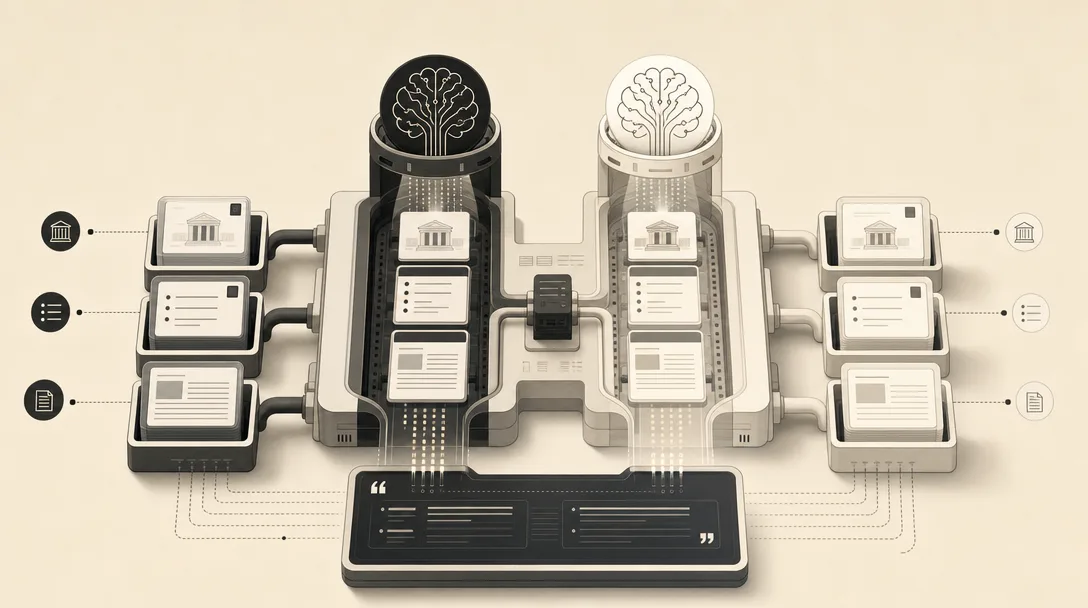
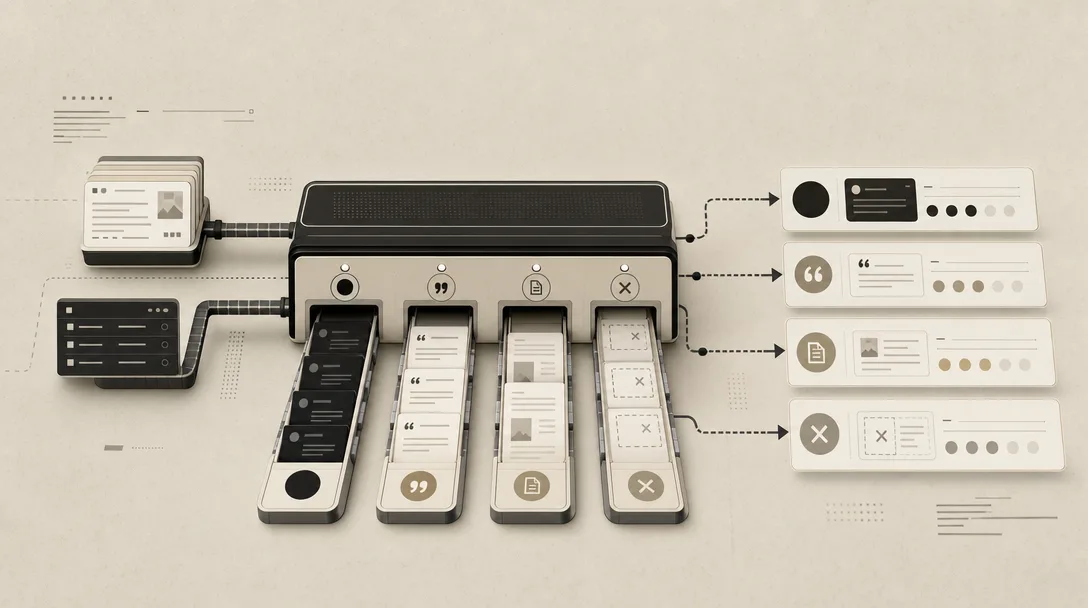
Ahrefs Brand Radar is an AI visibility monitoring tool that tracks how brands appear inside AI-generated answers across ChatGPT, Google AI Overviews, Gemini, Copilot, Perplexity, and Google AI Mode. According to Ahrefs Help, it scans over 350+ million search-backed prompts to surface where a brand is mentioned, missed, or beaten by competitors. It does not write briefs, produce articles, publish to a CMS, or refresh archives.
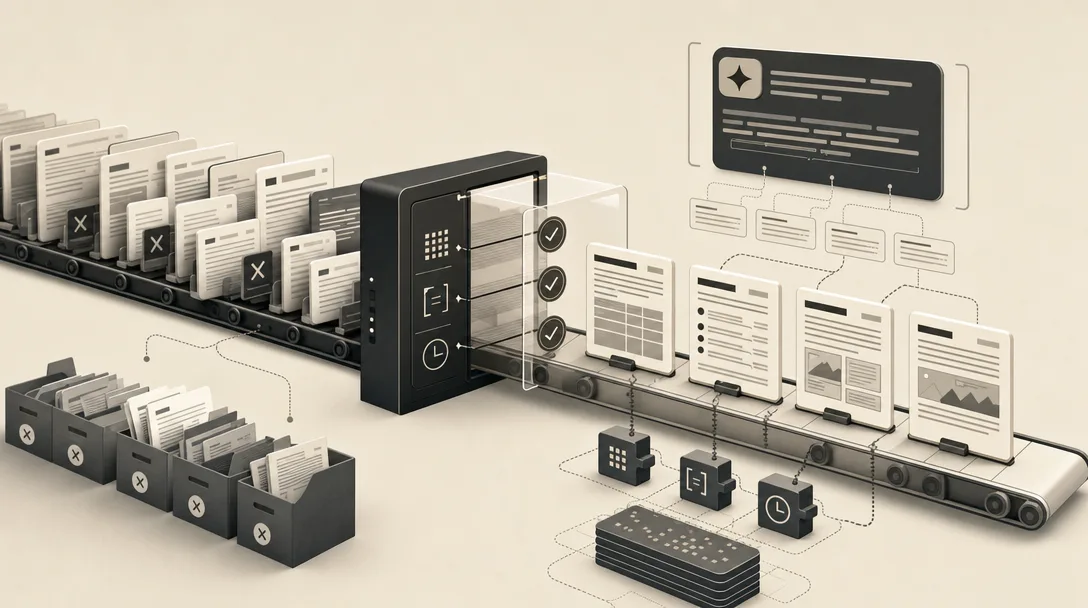
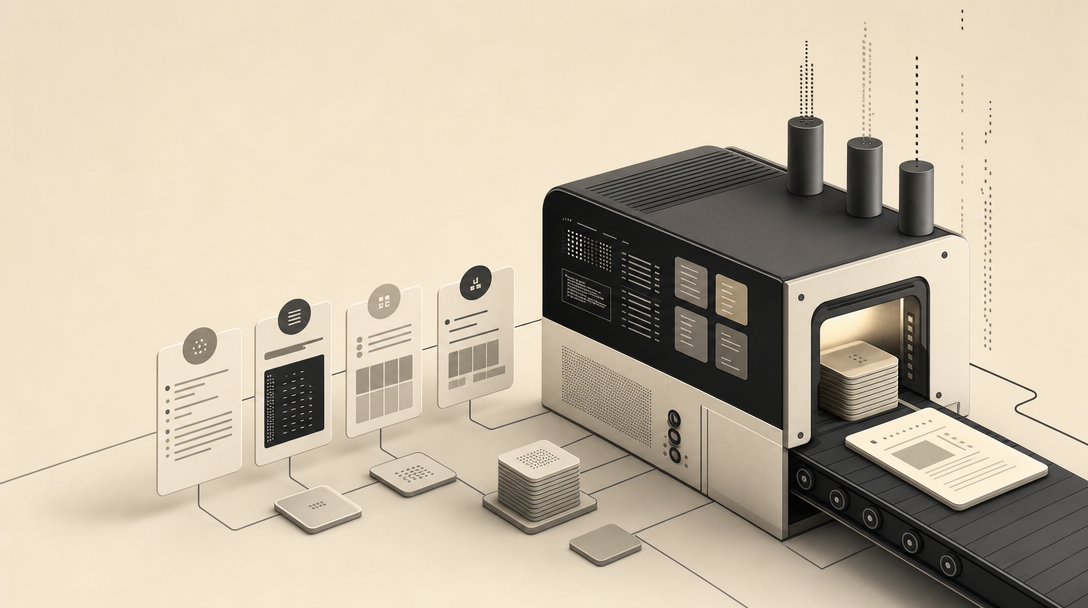
That distinction is the whole story of its price tag. Brand Radar is a dashboard for AI visibility, not a production line for the citation-shaped content that creates that visibility in the first place. Once you understand the tool sits on the monitoring side of the workflow, the question is no longer "what does it cost," but "what does it cost before a single article gets written?"
The corpus shows a meaningful gap between the sticker price and what teams actually spend to act on the data. EWR Digital pegs the minimum at $828 per month for one domain on the entry-level Ahrefs Lite plan plus the all-platform Brand Radar add-on. That spend produces reports, not pages. Briefs, drafts, editorial QA, internal linking, schema, publishing, and archive refreshes are entirely separate line items — and they're where AEO, GEO, and LLMO outcomes are actually built.
This article is a cost-of-action audit. We'll walk the line items, reconcile the conflicting standalone-vs-add-on claims, and end with the question every operator should answer before approving the budget: how much of the AI visibility budget is buying observation, and how much is buying citable inventory?
What It Costs: $199 per index, $699 for all platforms, and the $828/month full-tracking math
Single-platform Brand Radar access costs $199 per month per AI index, and all-platform access costs $699 per month and includes 2,500 custom prompt checks (Source: Ahrefs Help). That all-platform bundle is what most teams need if they want visibility across ChatGPT, Gemini, Copilot, Perplexity, and Google's AI surfaces — buying engines individually only makes sense for a team that has narrowed AI visibility to a single channel.
The full-tracking math sits on top of an existing Ahrefs subscription. According to EWR Digital, the minimum realistic cost for full AI visibility tracking is $129 + $699 = $828 per month, combining the Ahrefs Lite plan with the Brand Radar all-index add-on. EWR Digital estimates totals scale with the base plan as follows.
| Ahrefs base plan | Base price/mo | Brand Radar all-index add-on | Total /mo |
|---|---|---|---|
| Lite | $129 | $699 | $828 |
| Standard | $249 | $699 | $948 |
| Advanced | $449 | $699 | $1,148 |
Source: EWR Digital. Dageno reports the same $828–$1,148/month range when the base subscription and add-on are combined.
A few alternative configurations are worth noting. Connor Kimball calculates that running just one AI index on a Standard plan lands at $448/month ($249 base + $199 single-index Brand Radar), and $498/month with the entry custom prompt tracking add-on. Surferstack lists Brand Radar entry pricing at $328+/month when paired with the cheapest base plan and one index. None of these tiers include the production work — every dollar buys reporting surface area, not citations.
Stop paying to watch your AI visibility gaps and start closing them — Get My Site GEO Optimized.
How to Purchase: standalone tool, paid plan, or Brand Radar AI Add-on?
There is genuine inconsistency in Ahrefs' own messaging about how Brand Radar is sold, and any operator approving the budget should pin down the exact path before procurement. The Brand Radar product page at ahrefs.com/brand-radar describes it as a standalone tool available to free and paid users. Ahrefs Help, however, states that AI indexes specifically require the Brand Radar AI Add-on on any paid plan, and that other surfaces have their own gating: Search Demand requires Starter and above, and Web Visibility requires Standard and above. Beta indexes are free on any paid plan.
Third-party reviews land closer to the Help Center's framing. Surferstack states that Brand Radar is not a standalone product, requires an existing Ahrefs subscription starting at $129/month, and costs $699/month for the six-platform bundle (Source: Surferstack). Connor Kimball describes the AI-index portion as an add-on that sits on top of a paid base plan.
The practical reading: a free Ahrefs account may give you a look at limited Brand Radar surfaces, but the paid AI index tracking that the $199 and $699 prices refer to requires both a paid Ahrefs plan and the Brand Radar AI Add-on. Treat the standalone framing on the ahrefs.com/brand-radar product page as a marketing on-ramp, not a procurement path.
The corpus does not reconcile regional currency, tax, or billing-period differences. Ahrefs offers a 20% discount on annual billing across plans (Source: Ahrefs), but EUR pricing, regional VAT, and per-index annualization aren't documented in a way that can be quoted with confidence here. Confirm with Ahrefs directly before signing.
What does Ahrefs Brand Radar actually track across its 6 AI platform indexes?
According to Ekamoira, Brand Radar covers six AI platform indexes: Google AI Overviews, Google AI Mode, ChatGPT, Copilot, Gemini, and Perplexity. That coverage matters because it spans the engines most B2B SaaS marketing teams care about for citations — though notable absences include Claude, Grok, DeepSeek, and Meta AI, which are not part of the bundled six.
The word "index" carries some ambiguity in Ahrefs' own documentation. The $199/month per-index pricing implies each index is a discrete tracking surface, but the corpus does not clearly state whether Google AI Overviews and Google AI Mode count as one index or two. Some sources describe coverage as "five engines," others as "six platforms" — the difference likely hinges on whether Google's two AI surfaces are billed jointly or separately. Confirm this with sales before assuming index economics.
| Surface | What it tracks | Source |
|---|---|---|
| Google AI Overviews | Brand mentions in AI Overview answers | Ekamoira |
| Google AI Mode | Brand mentions in AI Mode answers | Ekamoira |
| ChatGPT | Brand mentions in ChatGPT responses | Ekamoira |
| Copilot | Brand mentions in Microsoft Copilot answers | Ekamoira |
| Gemini | Brand mentions in Gemini answers | Ekamoira |
| Perplexity | Brand mentions in Perplexity answers | Ekamoira |
Brand Radar also reaches beyond the six AI indexes. Ahrefs' Brand Radar blog positions the product as a 360-degree brand visibility tool covering Google search demand, web visibility, and video visibility (including YouTube and TikTok signals). Ahrefs Docs confirms that Brand Radar Looker Studio configuration can pull from Ahrefs prompts, custom tracked prompts, or both — useful for teams already running BI dashboards.
For deeper engine-by-engine context on what citation behavior looks like inside each platform, see the engine-specific guides on showing up in ChatGPT, Perplexity, Gemini, Copilot, and Google AI Overviews.
What is included in custom prompt tracking, and where can overages change the bill?
Custom prompt tracking is a separate add-on layer that lets teams monitor specific prompts beyond the Ahrefs prompt database. According to Ahrefs Help, the all-platform $699/month bundle includes 2,500 custom prompt checks per month, and additional capacity is purchased through three tiers.
| Tier | Monthly price | Included checks | Overage rate |
|---|---|---|---|
| Basic | $50 | 2,500 | $0.020/check |
| Growth | $100 | 7,000 | $0.015/check |
| Scale | $250 | 25,000 | $0.010/check |
Source: Ahrefs Help.
The economics matter because custom prompt checks are how a team tracks the prompts that actually drive their pipeline — not the prompts Ahrefs already indexes. A B2B SaaS team monitoring 50 buyer-intent prompts across six AI engines, refreshed daily, runs through 9,000 checks per month. That puts them on Growth at minimum, with overage exposure if monitoring scope expands.
Connor Kimball confirms custom prompt tracking is a paid add-on layered on top of Brand Radar, starting at $50/month for 2,500 prompts. Combined with the $199 single-index price and a $249 Standard base plan, that pushes the practical entry cost to $498/month for one engine with custom prompts.
The Ahrefs prompt database — quoted variously at 190M+, 250M+, 263M+, and 350M+ depending on the source — covers search-backed prompts derived from Ahrefs' keyword data. Custom prompt tracking is for everything else: branded prompts, comparison prompts, jobs-to-be-done queries, and internal sales scenarios that don't appear in keyword databases.
How do Brand Radar costs scale for agencies, domains, and client portfolios?
Brand Radar pricing is per-domain, which is the single most important fact for agencies and multi-site operators. According to EWR Digital, providing full Brand Radar tracking for 10 clients on the all-platform bundle creates a software bill of over $8,000 per month — and that's before any base Ahrefs seats, custom prompt overages, or content production budget.
The agency model has six cost levers, all of which compound:
- Base Ahrefs plan — $129 to $449/month per workspace.
- Brand Radar add-on per domain — $199/index or $699 all-platform.
- Custom prompt tier per domain — $0 to $250/month, plus overages.
- Number of clients/domains tracked — multiplies items 2 and 3.
- Number of AI indexes per domain — single-engine vs all-platform decisions.
- Content production capacity — separate budget for briefs, drafts, publishing, and refreshes.
| Agency scenario | Domains | Monthly Brand Radar spend | Annualized |
|---|---|---|---|
| Boutique, 3 clients, all-platform | 3 | ~$2,097 + base plan | ~$25k+ |
| Mid-market, 10 clients, all-platform | 10 | ~$6,990 + base plan | ~$84k+ |
| Multi-site operator, 25 clients | 25 | ~$17,475 + base plan | ~$210k+ |
Estimates derived from EWR Digital's per-domain economics; exclude custom prompts, overages, and content costs.
For agencies, the real cost question is what percentage of the visibility budget is being spent on observation versus what's left for production. A 10-client portfolio paying $8,000/month for monitoring needs at least the equivalent in editorial capacity to act on the gaps Brand Radar surfaces — otherwise the dashboard becomes an expensive read-only artifact.
How reliable is the AI visibility data, and why do prompt database counts conflict?
Accuracy matters because pricing decisions are downstream of trusted data. Ekamoira cites a Writesonic test from January 2026 showing that Brand Radar reported only 3 ChatGPT mentions versus 123 actual mentions, and 6 Perplexity mentions versus 212 actual mentions. That's a roughly 97% undercount on ChatGPT and 97% undercount on Perplexity in the cited test.
The methodology caveats are real. The corpus describes one third-party test on one brand at one date, and accuracy on AI mention tracking is genuinely hard — sampling rates, prompt sets, time windows, and engine response variability all affect counts. A single test should not be read as a verdict on the platform overall, but it does suggest that Brand Radar's reported counts are best treated as directional signals, not exhaustive mention logs.
The prompt database size is the second consistency problem. The corpus contains five different counts:
| Source | Reported size |
|---|---|
| Ahrefs Brand Radar blog | 190M+ monthly prompts |
| Ahrefs Brand Radar page | 250M+ search-backed prompts |
| Ekamoira (citing Ahrefs, Feb 2026) | 260M+ monthly prompts |
| Surferstack | 263M+ prompt database |
| Ahrefs Help Center | 350M+ search-backed prompts |
These numbers likely reflect different snapshot dates, different definitions (monthly volume vs total database), or different scopes (all indexes vs AI-only). The range is consistent with a fast-growing index, not necessarily a contradiction — but Ahrefs has not published a reconciling methodology note.
Ahrefs Brand Radar vs GEO and AI visibility tools: what is monitoring, and what is execution?
Brand Radar belongs to the AI visibility monitoring category, alongside other dashboard-style tools that report where brands appear in generated answers. Surferstack's comparison table marks Ahrefs Brand Radar as lacking content gap analysis, AI content generation, crawler logs, and traffic attribution — which is consistent with its design as a tracking layer, not an execution platform.
The category distinction matters because monitoring tools and execution tools answer different questions:
| Capability | Brand Radar (monitoring) | Content engine (execution) |
|---|---|---|
| Track brand mentions in AI answers | Yes | No |
| Benchmark competitors in AI search | Yes | No |
| Identify visibility gaps | Yes | Indirectly |
| Produce briefs and articles | No | Yes |
| Optimize for AEO, GEO, LLMO structure | No | Yes |
| Publish to CMS or headless stack | No | Yes |
| Refresh and update archives | No | Yes |
Source: Surferstack's comparison framework, extended.
The cheapest monitoring dashboard cannot fix the most expensive content problem: missing or non-citable pages.
This is the core operating reality for marketing teams choosing between budget allocations. Monitoring tools surface the gap. Execution tools fill it. They are complementary, not interchangeable, and they should be budgeted as separate line items. For a deeper breakdown of the workflows that actually produce citations, see AEO vs GEO vs LLMO and What Is GEO in 2026.
When should teams pay for monitoring versus investing in AEO, GEO, LLMO, and SEO content production?
The decision turns on what's already in the ground. Two clean cases:
- Pay for monitoring first when the team already has a healthy library of citable, well-structured pages and needs benchmarks to know which engines surface them, which competitors out-cite them, and which buyer prompts they're missing.
- Pay for content production first when the underlying problem is a thin or stale archive — pages that aren't structured for direct-answer extraction, missing schema, no llms.txt, no FAQ blocks, no entity clarity. Monitoring an empty cupboard costs $828/month and tells you the cupboard is empty.
Most teams the corpus describes — B2B SaaS marketing teams chasing AI citations, agencies scaling across clients, growth leaders refreshing fragmented archives — are in case two. The pages that get cited in ChatGPT, Gemini, Perplexity, and Google AI Overviews share a small set of properties: direct-answer openings, attributed statistics, entity-clear writing, structured comparisons, and refresh cadence that keeps facts current. None of that comes from a dashboard.
This is where Mentionwell fits. It's a blog engine, not a monitoring tool. It runs an editorial pipeline that produces research-grounded articles built for AEO, GEO, LLMO, and classic SEO simultaneously, ships into existing CMS or headless stacks, and supports programmatic SEO and archive refreshes across one site or many. Teams pair it with monitoring once the library is producing citations worth tracking.
For the broader category framing, see What Is AI SEO in 2026, What Is AEO in 2026, and What Is LLMO in 2026.
A cost-of-action checklist before approving the Brand Radar budget
Run this checklist before signing the procurement order. Every item is a budget lever or a hidden cost.
- Base Ahrefs plan: Lite ($129), Standard ($249), or Advanced ($449)? Annual billing saves 20%.
- AI index count: Single index at $199/month or all-platform bundle at $699/month with 2,500 included custom prompt checks?
- Custom prompt tier: $0 (use included), $50 Basic, $100 Growth, or $250 Scale — modeled against actual prompt volume per domain.
- Overage exposure: $0.020, $0.015, or $0.010 per check at the three tiers — calculate worst-month scenarios.
- Domain and client count: Brand Radar is priced per-domain. Multiply items 2–4 by your portfolio.
- Reporting needs: Will you use Looker Studio integration? Account for BI seat costs.
- Confidence in data: Run your own mention spot-checks against the dashboard before scaling spend, given the cited Writesonic accuracy gap.
- Content production budget: Separate line item. Briefs, drafts, schema, publishing, internal linking, and archive refreshes don't come from Brand Radar.
- Engine coverage gaps: Brand Radar covers six platforms. If Claude, Grok, DeepSeek, or Meta AI matter to your audience, plan supplementary tracking.
- Sequence: Are you buying observation first or production first? An empty archive doesn't get more visible by being watched.
The throughline for every line item on this list is the same: monitoring shows you the gap, but only citation-shaped content closes it. Mentionwell is the blog engine for teams that want a repeatable pipeline producing AEO, GEO, LLMO, and SEO-ready articles across one site or hundreds — with CMS delivery, programmatic SEO support, and archive refreshes built in. Get My Site GEO Optimized and start producing the citable inventory that makes any visibility tool worth paying for.
Sources
- Ahrefs Brand Radar Review & Pricing Comparisons (2026)www.ewrdigital.com
- Plans & Pricing - Ahrefsahrefs.com